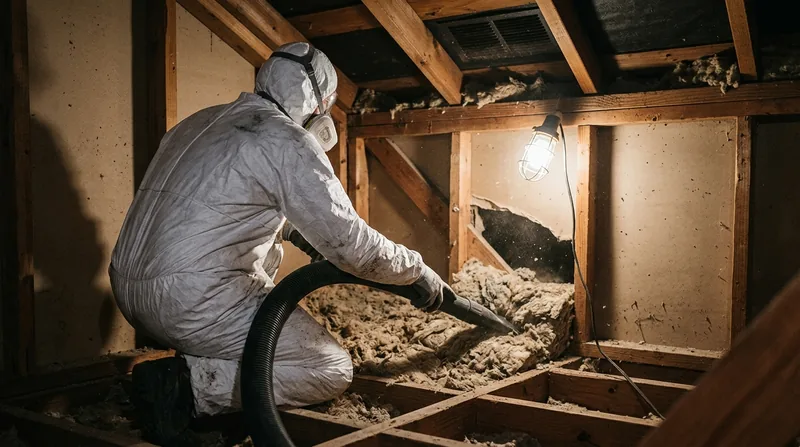




Gainesville's mid-century block homes and older rental stock near the University of Florida often sit with attic insulation that has settled flat and lost its thermal value after decades of Florida heat and humidity. When that compacted fiberglass or mineral wool is no longer performing, or when moisture and rodent damage have compromised it, insulation removal in Gainesville is the necessary first step before new spray foam or blown-in material can go in. We remove the old material, inspect the substrate for damage, and prepare the attic or wall cavity for a proper retrofit. This is not a glamorous job, but it is the foundation of every insulation upgrade that actually works. The hot, humid climate here drives moisture inward most of the year, and vented attics pull in damp air that works its way down through ceilings and ductwork. That steady moisture load is what pushes cooling bills up across Alachua County, and removing failed insulation before it compounds the problem is the smart move.
Why Insulation Removal Matters in Gainesville's Older Homes
Gainesville's housing stock spans historic neighborhoods like Duckpond and mid-century block subdivisions where original attic insulation has been baking under the sun for 50 or 60 years. Fiberglass and mineral wool compress over time, losing their R-value and allowing hot air to pour into living spaces. Moisture from Florida's humid climate also settles into old insulation, creating conditions where rodent nesting and mold growth become problems. Removing that failed material is not optional if you want a retrofit to work. The substrate underneath (roof deck, rim joists, attic floor) must be clean and dry before new insulation is installed, and any contamination or structural damage has to be identified and addressed first.
- Compacted insulation loses R-value and allows heat transfer through ceilings and into conditioned space.
- Moisture trapped in old fiberglass creates mold risk and attracts rodent activity over time.
- Removing old material prevents mixing of incompatible insulation types in the same cavity.
- A clean substrate ensures spray foam or blown-in material bonds properly and performs to specification.
- Inspection during removal catches hidden damage to roof decking, joists, or electrical wiring before new work begins.
Getting the old insulation out correctly sets up the new installation for success and protects your investment in the retrofit.
Key info: Florida's building code and local permit requirements for attic work vary by city. Gainesville, Alachua, Newberry, and High Springs each have their own building department rules on ventilation and thermal barriers. Your local building department can tell you what applies at your address, but the final authority is always your local building official. Check with your city before work begins.
For more on what comes after removal, see our guide to attic spray foam insulation in Gainesville.
How We Handle Insulation Removal in Gainesville
Our removal process starts with a site visit to assess the condition of existing insulation, check for moisture, rodent activity, or contamination, and plan the safest and most efficient extraction. We bring the equipment and containment needed to remove material without spreading dust or debris into your living space. Once the old insulation is out, we inspect the substrate, identify any damage or moisture issues, and document what we find. If there is a moisture problem, we do not cover it up with new insulation. We fix the moisture first or we walk away. That is the standard that separates responsible work from rig-and-run operations.
- We inspect the attic or wall cavity for moisture, mold, rodent droppings, or structural damage before removal starts.
- We use mechanical ventilation and containment during removal to keep dust and debris out of your home.
- We haul away all old insulation material and dispose of it according to local regulations.
- We photograph and document the condition of the substrate so you know exactly what you are working with.
- We identify moisture sources or leaks and recommend correction before new insulation is installed.
- We provide a written scope and estimate with R-value and thickness specifications for the new material.
A clean, dry, well-documented substrate is the foundation of a retrofit that lasts.
Local example: A home in Haile Plantation or near the University of Florida campus with a vented attic and settled fiberglass typically requires 8 to 16 hours of removal work, depending on attic size and the depth of old material. A smaller rental property in Archer or Hawthorne might take 4 to 6 hours. We give you a realistic timeline and price before we start.
Learn more about insulation replacement and re-insulation options once old material is out.
Insulation Removal Methods and Best Practices
| Approach | Description | Best for |
|---|---|---|
| Vacuum extraction | Loose-fill blown-in insulation is vacuumed into a containment truck using negative pressure and HEPA filtration. | Attics with open-cell foam or blown fiberglass that has not settled into batts or been sprayed. |
| Manual batt removal | Fiberglass or mineral wool batts are hand-pulled from joists and carefully bagged for disposal. | Mid-century block homes with batt insulation that is still structured and accessible. |
| Spray foam removal | Closed-cell or open-cell foam is mechanically scraped or cut away from the substrate without damaging roof decking or joists. | Attics or crawl spaces where previous foam installation failed or needs to be replaced. |
| Substrate cleaning | After removal, the attic floor or wall cavity is swept, vacuumed, and inspected for debris, contamination, or damage before new insulation is installed. | All removal jobs, regardless of method, to ensure a clean surface for spray foam or blown-in material. |
Each method is chosen based on the type and condition of existing insulation and the layout of the space. We do not use one technique for every job.
Insulation Removal Cost in Gainesville: What to Expect
The cost of insulation removal in Gainesville depends on the size of the attic or wall cavity, the type and depth of existing material, access difficulty, and whether contamination or damage requires extra handling. A typical residential attic removal in Gainesville or nearby areas starts at $950 and can range from $1,200 to $2,500 or more for larger homes or complex conditions. The biggest cost drivers are attic square footage, the weight and compaction of old fiberglass or mineral wool, and whether the material is mixed with rodent droppings or moisture damage that requires careful containment. Homes with two-story layouts or cathedral ceilings near Haile Plantation or Newberry often have larger attic volumes and longer removal times. Smaller rentals near campus or in Archer may be on the lower end of the range.
We provide a free written estimate with detailed scope, labor hours, and disposal costs so you know exactly what you are paying for before work starts. Getting 2 to 3 estimates from different contractors is smart practice. Watch for estimates with no R-value specs, no labor breakdown, or promises of immediate re-entry after spray foam cure. Those are red flags. See our full pricing overview for more detail on removal and retrofit costs.
What to Look for When Hiring an Insulation Removal Contractor Near Me in Gainesville
Choosing a contractor for insulation removal is about more than price. You want someone who will inspect carefully, document what they find, handle waste responsibly, and prepare the substrate correctly for whatever comes next. Ask any contractor you interview for references from recent removal jobs in Gainesville, Alachua, or Newberry. Request a written estimate that includes labor hours, disposal method, and a clear description of what happens if moisture or damage is found. Verify that the contractor carries full insurance and ask for a certificate of insurance before work starts. If your home is in an HOA or historic district, check whether exterior access or attic work requires architectural approval. Most insulation removal does not trigger permitting, but your local building department can confirm what applies at your address.
- Ask for at least two references from removal jobs completed in Gainesville or Alachua County in the past 12 months.
- Request a written estimate that breaks out labor, disposal, and any supplemental work identified on site.
- Verify that the contractor carries full insurance and provides a certificate before work begins.
- Confirm that the contractor will inspect for moisture, rodent activity, and substrate damage during removal.
- Ask what happens if contamination or structural damage is found and how that is handled and priced.
- Check your HOA rules or local historic preservation guidelines if your property is subject to them.
The right contractor will answer your questions directly and give you honest guidance on what your attic needs.
Contact us for a free estimate and inspection. Call (352) 450-6430 or visit our contact page to schedule a time that works for you.
Insulation Removal in Gainesville: Pricing Guide
| Service | Price | Details |
|---|---|---|
| Residential attic removal (up to 1,200 sq ft) | Starting at $950 | Vacuum extraction of loose-fill or manual removal of batts, substrate inspection, and haul-away included |
| Large attic or complex removal | Starting at $1,500 | Two-story homes, cathedral ceilings, or attics with rodent damage or moisture contamination requiring careful handling |
| Spray foam removal or mixed material | On estimate | Mechanical scraping of existing foam or mixed insulation types requires site assessment to determine scope and labor |
| Travel and setup | Included | No separate mileage or call-out fee within Gainesville and surrounding service areas in Alachua County |
| Free written estimate | No cost | Response within 24 hours with detailed scope, labor breakdown, and removal method specific to your attic |
Indicative pricing, the exact cost depends on square footage, finish, and site access. Free personalized estimate within 24h at (352) 450-6430.


