Understanding R-Value and Spray Foam Insulation R Value Per Inch
When homeowners in Gainesville start researching insulation options, R-value becomes the central conversation. R-value measures thermal resistance, or how well a material stops heat from flowing through it. The higher the R-value, the better the insulation performs. But here's what many homeowners don't realize: not all insulation materials deliver the same R-value per inch.
Attic Spray Foam Insulation is one of the most efficient options available. Closed Cell Spray Foam Insulation delivers approximately 6.0 to 7.0 R-value per inch, while Open Cell Spray Foam Insulation provides roughly 3.5 to 3.6 R-value per inch. For comparison, traditional fiberglass batts deliver only 3.2 to 3.8 R-value per inch, and blown-in cellulose offers around 3.5 per inch. This means spray foam achieves superior insulation performance in less thickness, making it ideal for attics where space is limited or where maximum efficiency matters.
The difference becomes even more significant when you factor in air sealing. Spray foam doesn't just insulate; it also seals air leaks simultaneously. Traditional insulation requires a separate air sealing step, adding time and cost to your project.
R Value Requirements by State: What Florida Expects
Florida's climate is unique, and so are its insulation requirements. The state follows the International Energy Conservation Code (IECC) standards, which specify minimum R-value requirements based on climate zone. Gainesville falls into Climate Zone 2, which requires an attic R-value of R-38 to R-49 for optimal energy efficiency and compliance with current building codes.
This means your attic insulation must resist heat transfer at a level that meets or exceeds R-38 minimum. With closed-cell spray foam delivering 6.0 to 7.0 R-value per inch, you'd need only 6 to 7 inches to meet the requirement. With open-cell foam at 3.5 to 3.6 R-value per inch, you'd need 11 to 14 inches. Traditional fiberglass would require 12 to 15 inches of material. When you consider labor, materials, and the time involved, spray foam becomes a compelling choice for meeting Florida's standards efficiently.
Many homeowners underestimate how much insulation they actually have or need. A professional inspection can reveal whether your current attic insulation meets code requirements or falls short. If you're unsure about your home's current R-value, we encourage you to reach out for a free estimate and assessment.
Air Sealing vs. Full Spray Foam: Which Strategy Wins
This is the question that divides homeowners and contractors: should you seal air leaks first and add traditional insulation, or go with a full spray foam solution? The answer depends on your home's condition, your budget, and your long-term energy goals.
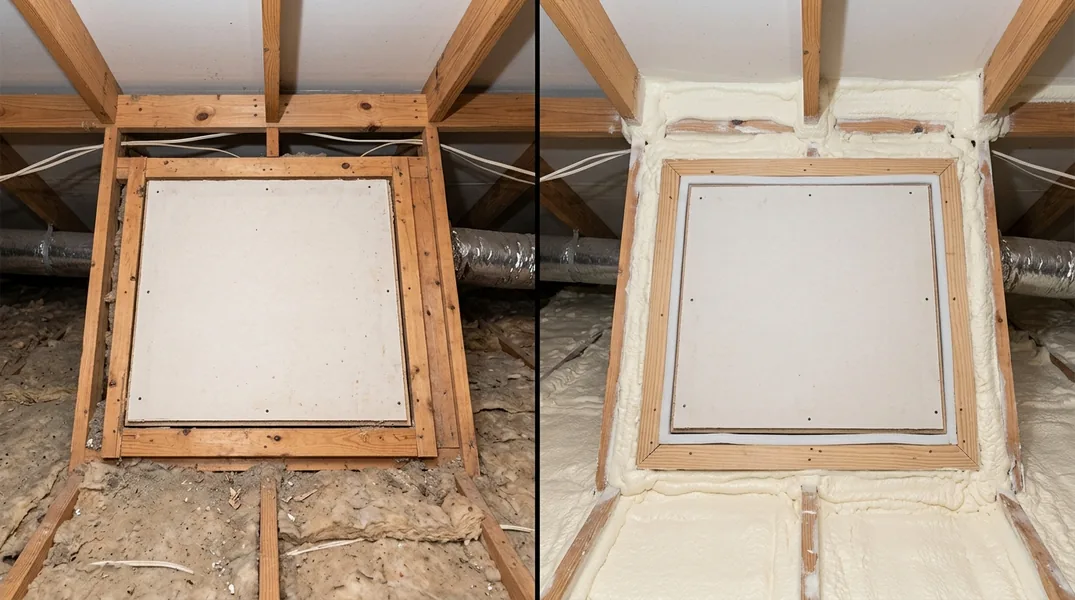
Air sealing alone addresses the most critical problem in most older homes: uncontrolled air leakage. Gaps around electrical outlets, attic hatches, ductwork, and pipe penetrations allow conditioned air to escape and outside air to enter. Sealing these gaps with caulk, weatherstripping, and foam sealant can reduce energy loss by 10 to 20 percent. This is a legitimate first step, especially if your insulation levels are already adequate and your primary issue is air infiltration.
However, full spray foam insulation solves both problems simultaneously. It insulates while it seals every crack, crevice, and penetration in one application. You're not paying for two separate jobs or two separate contractor visits. The foam expands to fill voids that traditional insulation cannot reach. Over time, this comprehensive approach typically delivers better energy performance and lower utility bills. Plus, spray foam provides superior moisture management in Florida's humid climate, which is a significant advantage that air sealing alone cannot offer.
For homeowners with older attics, significant air leakage, or those seeking maximum efficiency, full spray foam is usually the better investment. For those with relatively new construction and minor air leakage issues, targeted air sealing combined with additional insulation may suffice.
How Thick Should Spray Foam Be: Getting the Thickness Right
Determining the correct thickness for spray foam insulation requires understanding both your R-value target and the type of foam you're using. As discussed earlier, closed-cell spray foam is more efficient per inch, so it requires less thickness to achieve the same R-value as open-cell foam. For a Gainesville home aiming to meet the R-38 minimum standard, closed-cell spray foam needs only 6 to 7 inches, while open-cell requires 11 to 14 inches.
But minimum code compliance isn't always the best goal. Many energy-conscious homeowners opt for R-49 or even R-60 in their attics, especially if they plan to stay in the home long-term or want to maximize energy savings. This translates to 7 to 9 inches of closed-cell foam or 14 to 17 inches of open-cell foam. The additional thickness costs more upfront but delivers measurable reductions in heating and cooling costs, particularly important during Florida's hot, humid summers.
Another factor is the application method. Spray foam contractors must apply the material in layers, typically 1 to 2 inches per pass, to allow proper expansion and curing. Rushing the process or applying too much thickness in a single pass can result in poor performance or structural issues. Professional contractors know the proper technique, which is why working with experienced installers matters. The right thickness, applied correctly, ensures your attic insulation performs as intended for decades.
Insulation Rebates: Financial Incentives for Gainesville Homeowners
The federal insulation tax credit ended on December 31, 2025, so ask your utility company about any current rebates instead.
Additionally, many utility companies and state programs offer insulation rebates. Florida Power and Light (FPL) and other local utilities frequently provide rebates for attic insulation upgrades that meet energy efficiency standards. These rebates can range from a few hundred to several thousand dollars, depending on your location and the scope of the project. Some programs even offer incentives specifically for spray foam insulation because of its superior performance characteristics.
To maximize your financial benefit, it's important to use a contractor who understands these programs and can help you navigate the application process. When you contact Gainesville Spray Foam Insulation at (352) 450-6430 for your free estimate, ask about current rebates. We can often help identify programs you qualify for and ensure your project is installed to standards that qualify for these incentives. The combination of Rebates can significantly reduce your out-of-pocket pricing and accelerate your return on investment.
Attic Spray Foam Insulation Near Me: When to Call a Professional
If you're searching for attic spray foam insulation near you in Gainesville, now is an ideal time to reach out to a qualified contractor. Professional installation ensures your insulation is applied correctly, meets building codes, qualifies for tax incentives, and performs as intended. This isn't a DIY project. Spray foam requires specialized equipment, safety training, and expertise to install properly.
A professional contractor will conduct a thorough attic inspection, assess your current insulation levels, identify air leakage points, and recommend the right solution for your specific home. Whether your home needs targeted air sealing, additional insulation over existing materials, or a full spray foam retrofit, an experienced team can guide you toward the most cost-effective approach. Gainesville Spray Foam Insulation serves homeowners throughout Gainesville, Alachua, Newberry, and High Springs, bringing years of experience and a commitment to quality workmanship to every project. Contact us today at (352) 450-6430 to discuss your insulation needs and take the first step toward a more efficient, comfortable home.
Looking for a professional spray foam insulation contractor in Gainesville? Gainesville Spray Foam Insulation responds fast for all your spray foam insulation needs.
Get a Free Quote