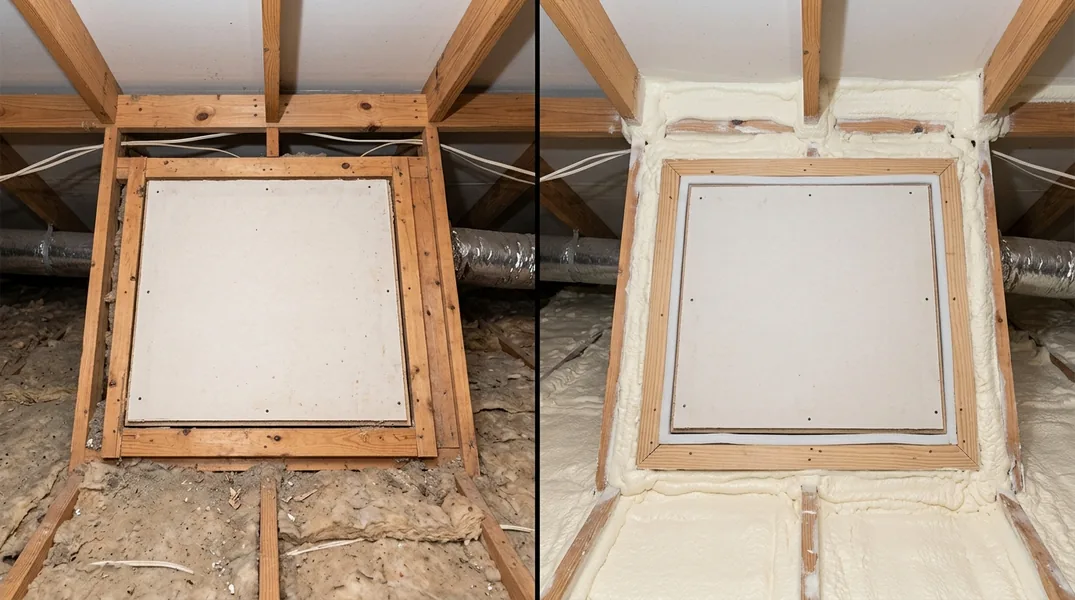
Why Gainesville's Humidity Destroys Standard Insulation
Gainesville summers are relentless. Between June and September, temperatures regularly exceed 90 degrees Fahrenheit, and the humidity often climbs above 80 percent. This combination creates a perfect storm for traditional insulation materials. Fiberglass batts, cellulose, and mineral wool all absorb moisture like a sponge, which compromises their insulating properties and invites mold growth into your attic space.
When moisture penetrates standard insulation, the R-value (the measure of thermal resistance) drops significantly. A fiberglass batt rated R-19 might perform like R-12 or worse once it absorbs humidity from the air. This means your air conditioning system has to work harder to cool your home, driving up energy bills and shortening the lifespan of your HVAC equipment. The humid climate in Alachua and surrounding areas makes this problem even more acute for homeowners who don't address their attic insulation properly.
How Spray Foam Handles Heat and Moisture Better Than Anything Else
Closed Cell Spray Foam Insulation is fundamentally different from traditional materials. It expands during application to fill every cavity, gap, and void in your attic, creating an air-tight seal that standard insulation simply cannot match. This dense, moisture-resistant barrier stops humid air from penetrating into the insulation itself, which means the R-value stays consistent year-round, even during Gainesville's most oppressive summers.
The closed-cell structure of this foam contains millions of tiny cells filled with gas that resist heat transfer far more effectively than fiberglass or cellulose. Because it doesn't absorb moisture, it won't support mold growth or deteriorate over time. Unlike traditional materials that settle and lose effectiveness after a few years, spray foam maintains its performance for decades. For homeowners dealing with metal buildings, barndominiums, or pole barns, this advantage becomes even more critical, as metal conducts heat rapidly and needs superior insulation to maintain comfort.
Metal Building Insulation and Pole Barn Solutions
Metal buildings present unique insulation challenges that Open Cell Spray Foam Insulation and closed-cell varieties handle exceptionally well. Steel and aluminum conduct heat at rates that make traditional insulation inadequate. When summer heat hits a metal roof or walls, that thermal energy transfers directly into the interior space unless you have a barrier with extremely high R-value performance. Spray foam adheres directly to metal surfaces, eliminating air gaps that would otherwise allow heat to radiate through.
For pole barns and barndominiums in the Newberry area, spray foam insulation transforms an uncomfortable, energy-inefficient space into a usable, climate-controlled environment. The best insulation for metal buildings combines high R-value, moisture resistance, and structural support. Spray foam provides all three. It also adds rigidity to metal framing, which can reduce vibration and noise during storms. Whether you're converting a pole barn into living space or maintaining a metal agricultural building, spray foam delivers performance that fiberglass batts or blown-in cellulose simply cannot achieve in such demanding conditions.
Steel Building Insulation and Barndominium Conversions
Barndominiums have become increasingly popular in rural Florida communities, and converting a steel or pole barn into a home requires insulation that can handle both the structural demands and the climate challenges of the region. Steel building insulation must prevent condensation on interior metal surfaces, maintain consistent indoor temperatures, and support the weight of the material without sagging or settling. Spray foam excels at all three requirements because it bonds directly to steel surfaces and doesn't rely on mechanical fasteners or gravity to stay in place.
The best insulation for metal building conversions also needs to accommodate the unique geometry of barn structures. Most barns have cathedral ceilings, irregular roof angles, and large open spans that make traditional insulation installation difficult and inefficient. Spray foam conforms to any shape, filling every corner and crevice in a single application. This means no thermal bridges, no gaps, and no areas where humid air can infiltrate and cause problems. Homeowners in High Springs and throughout the region who have converted barndominiums consistently report lower energy costs and dramatically improved comfort after spray foam installation.
Attic Spray Foam Insulation Near Me: When to Call a Professional
If you're noticing that your attic feels hot to the touch during summer, or if you've seen signs of moisture, mold, or pest damage in your attic space, it's time to consider Attic Spray Foam Insulation from a qualified contractor. Professional installation is critical because spray foam application requires specialized equipment, proper safety protocols, and expertise in building science. DIY attempts often result in uneven coverage, insufficient thickness, or improper ventilation that can actually worsen indoor air quality.
A professional spray foam contractor will assess your attic's current condition, identify air leaks and thermal weak points, and recommend the right foam type and thickness for your specific situation. They'll also ensure that your attic maintains appropriate ventilation where needed (soffit vents, ridge vents, etc.) to prevent moisture accumulation in other building cavities. Gainesville Spray Foam Insulation serves homeowners throughout the region with expert installation, using only high-quality materials and proven application techniques. When you're ready to stop wasting money on energy bills and start enjoying a cooler, more comfortable home, reaching out for a free estimate is the first step.
Attic Spray Foam Insulation Cost in Gainesville: What to Budget
The pricing for spray foam insulation varies based on attic size, current insulation condition, foam type (open-cell versus closed-cell), and the complexity of your roof structure. Closed-cell foam typically costs more per square foot than open-cell, but it offers superior R-value, moisture resistance, and structural benefits that justify the investment for most Gainesville homeowners. Open-cell foam is a more budget-friendly option that still provides excellent thermal performance and air sealing, making it suitable for many residential applications.
When evaluating the cost, consider the long-term return on investment. Spray foam can reduce heating and cooling costs by 15 to 40 percent depending on your current insulation condition and how efficiently your HVAC system operates. In Gainesville's hot climate, these savings accumulate quickly. Most homeowners recoup their spray foam investment within five to seven years through reduced energy bills, and the material lasts 50 years or more. Rather than comparing spray foam pricing to cheaper alternatives like fiberglass, think of it as an upgrade that pays for itself while dramatically improving comfort and protecting your home from moisture damage. Contact Gainesville Spray Foam Insulation at (352) 450-6430 to discuss your specific project and receive a detailed quote tailored to your needs.
Looking for a professional spray foam insulation contractor in Gainesville? Gainesville Spray Foam Insulation responds fast for all your spray foam insulation needs.
Get a Free Quote