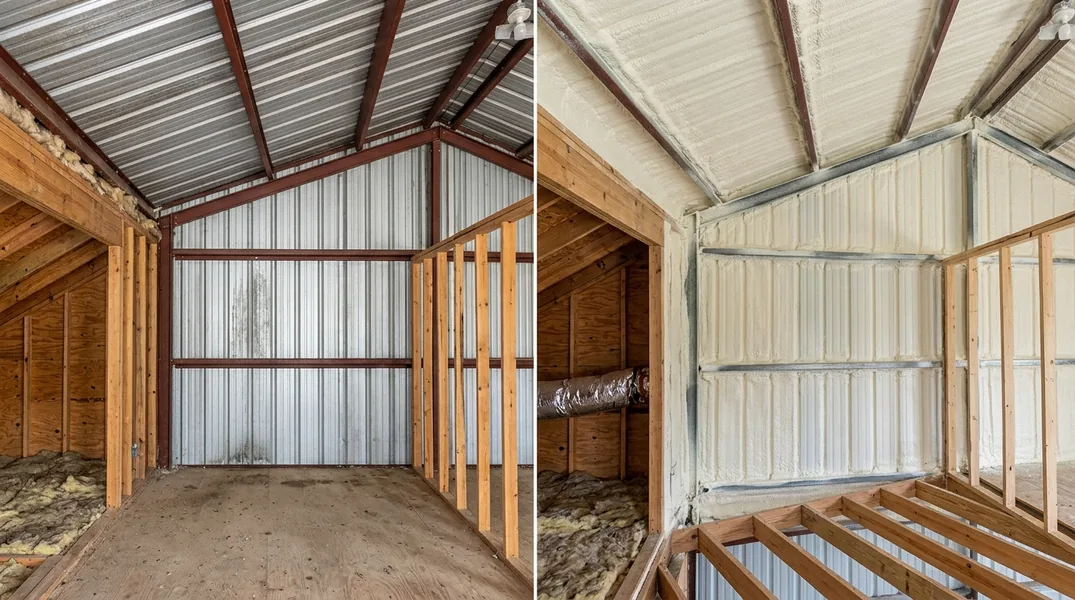
The Mid-Century Block Home Challenge in Gainesville
Mid-century block homes are iconic in Gainesville, representing a significant portion of the area's residential architecture. Built primarily between the 1940s and 1970s, these concrete block structures offered affordable, durable housing that still stands today. However, what made them economical to build has become a significant liability for modern homeowners: their attic insulation systems are woefully inadequate by today's energy efficiency standards.
The problem stems from how these homes were originally constructed. Most mid-century block homes in Gainesville were built with minimal attic insulation, if any at all. The concrete block walls themselves provide some thermal mass, but the attic space above remains a thermal nightmare. Homeowners living in these properties often report skyrocketing cooling bills during Florida's brutal summers and inconsistent temperature control throughout the home. The combination of poor attic insulation, uninsulated block walls, and the region's intense heat creates the perfect storm for energy waste.
Why Traditional Insulation Methods Fall Short
When homeowners with mid-century block homes consider upgrading their attic insulation, they typically encounter three traditional options: fiberglass batts, blown-in cellulose, and blown-in fiberglass. Each has significant limitations, particularly in older homes with irregular framing, air leaks, and challenging attic configurations. Blown in insulation, while better than batts in some respects, still leaves gaps and doesn't address air infiltration that plagues these older structures.
Fiberglass batts are the cheapest option upfront, but they're notoriously ineffective in attics with existing air leaks. They also settle over time, reducing their R-value effectiveness. Blown in insulation performs better initially but doesn't seal gaps or address moisture issues common in older homes. Spray foam vs fiberglass comparisons consistently show that traditional materials simply cannot match the air-sealing capabilities that modern homeowners need. Additionally, mid-century homes often have irregular joist spacing, ductwork running through the attic, and numerous penetrations that traditional insulation cannot properly address. The result is that homeowners invest thousands in upgrades, only to see minimal improvements in comfort or energy bills.
Spray Foam vs Blown-In Insulation: Why Modern Homes Need Modern Solutions
The comparison between spray foam vs blown in insulation reveals why spray foam has become the preferred choice for attic upgrades in older homes. While blown in insulation provides decent R-value per inch, it cannot seal air leaks. Spray foam, by contrast, expands to fill every cavity, crack, and gap in your attic space. This air-sealing capability is crucial in mid-century block homes, where air infiltration can account for 30 to 40 percent of your home's energy loss.
Attic Spray Foam Insulation works by creating a continuous thermal and air barrier across your entire attic. When spray foam is applied, it expands to fill voids around electrical wiring, HVAC ducts, and structural irregularities that blown-in materials simply cannot address. The spray foam vs cellulose debate also highlights moisture control advantages. Cellulose can absorb moisture in humid climates like Florida, potentially leading to mold and degradation. Spray foam resists moisture and won't settle or degrade over time, maintaining its R-value for decades.
Spray Foam vs Fiberglass: Understanding the Superior Performance
When evaluating spray foam vs fiberglass for attic insulation, the performance differences become immediately apparent. Fiberglass batts are installed between joists and rely on perfect installation to be effective. Any gaps, compression, or moisture exposure significantly reduces their performance. In mid-century homes with irregular framing and existing moisture issues, fiberglass batts often perform 20 to 30 percent below their rated R-value. Spray foam, by contrast, maintains its rated performance because it fills every space completely and doesn't degrade when exposed to minor moisture.
The longevity argument also favors spray foam. Fiberglass can compress, settle, and deteriorate over 15 to 20 years, particularly in attics with temperature fluctuations. Closed Cell Spray Foam Insulation maintains its structural integrity and R-value for 50 years or more. For homeowners in mid-century block homes who plan to stay long-term, spray foam represents a one-time investment that won't require replacement. The initial cost is higher than fiberglass, but the long-term value proposition is significantly better when you factor in energy savings and durability.
Best Insulation for Attic in Older Homes: Why Spray Foam Wins
When determining the best insulation for attic spaces in mid-century block homes, spray foam consistently outperforms alternatives. The best insulation for attic applications must address three critical factors: R-value, air sealing, and moisture resistance. Spray foam excels in all three categories. Open Cell Spray Foam Insulation provides excellent R-value per inch (approximately 3.6 per inch) while remaining more affordable than closed-cell options. Closed-cell spray foam offers even higher R-value (approximately 6 to 7 per inch) and provides additional structural support and moisture resistance, making it ideal for homes prone to humidity issues.
For mid-century block homes in the Gainesville area, the choice between open-cell and closed-cell spray foam depends on your specific situation. Open-cell spray foam is ideal for attics where moisture control is less critical and budget is a consideration. Closed-cell spray foam is the premium choice for homes with existing moisture problems or those seeking maximum energy efficiency. Both options dramatically outperform traditional insulation methods in terms of air sealing, thermal performance, and longevity. The investment in proper attic insulation using spray foam technology can reduce cooling costs by 30 to 50 percent, making it one of the most cost-effective energy upgrades available for older homes.
Attic Spray Foam Insulation Cost in Gainesville: What to Budget
Understanding attic spray foam insulation cost is essential for homeowners planning their upgrade. Spray foam typically costs more upfront than traditional insulation, ranging from $1.50 to $3.50 per board foot depending on the type (open-cell or closed-cell) and your specific attic configuration. For a typical mid-century home with a 1,000 square foot attic space, you can expect to invest between $3,000 and $7,000 for professional installation. While this is significantly higher than blown-in insulation (typically $1,000 to $2,500), the long-term value is substantially better.
The key to understanding spray foam pricing is recognizing that you're not just paying for insulation; you're investing in air sealing, moisture control, and durability that traditional materials cannot provide. When you calculate energy savings over 15 to 20 years, plus the fact that spray foam won't require replacement like fiberglass will, the cost per year of service is actually lower than traditional methods. To get an accurate quote for your specific home, contact Gainesville Spray Foam Insulation at (352) 450-6430 for a free estimate. We'll evaluate your attic space, discuss your energy goals, and provide transparent pricing tailored to your mid-century home's unique needs.
Taking Action: Professional Attic Spray Foam Insulation Near Me
If you own a mid-century block home in Gainesville and are experiencing high energy bills or inconsistent temperature control, your attic insulation is likely the culprit. Professional installation of spray foam insulation is not a DIY project. The equipment is specialized, the installation technique requires expertise, and improper application can result in poor performance or even safety issues. Hiring experienced professionals ensures that your insulation is applied correctly, that all gaps and penetrations are sealed, and that you receive the full performance benefits spray foam offers.
Gainesville Spray Foam Insulation specializes in upgrading attic insulation in older homes throughout the area. We understand the unique challenges that mid-century block homes present, and we have the expertise to recommend whether open-cell or closed-cell spray foam is best for your situation. Our team has helped hundreds of homeowners reduce their energy costs and improve their home comfort. Don't let outdated insulation continue to drain your wallet. Call us today at (352) 450-6430 or visit our website to schedule your free estimate. We'll help you understand your options and provide a clear path to a more energy-efficient, comfortable home.
Looking for a professional spray foam insulation contractor in Gainesville? Gainesville Spray Foam Insulation responds fast for all your spray foam insulation needs.
Get a Free Quote